Men’s Spandex Swimsuits: From Speedos to Pouch-Only Designs and Everything in Between
The Ultimate Guide to Men’s Spandex Swimwear, Bikinis, Briefs, Thongs, Micro Swimsuits, and Extreme Pouch Designs
Men’s spandex swimsuits have come a long way from traditional racing briefs and classic Speedos. What was once primarily associated with competitive swimming, European beaches, and athletic performance has evolved into an exciting world of swimwear featuring hundreds of different cuts, fits, and styles. Today’s men can choose everything from conservative spandex swim shorts and traditional briefs to tiny bikinis, micro thongs, G-strings, ultra-micro pouch swimsuits, and designs so minimal that they consist of little more than a small pouch held in place by narrow straps.
Perhaps the most interesting development is that men’s swimwear is no longer limited to traditionally masculine designs. Modern spandex swimsuits include feminine styles, gender-neutral swimwear, male-to-female (MTF) transformation designs, micro-bulge swimsuits, and specialty garments intended to make the male front appear nearly flat.
For men who enjoy sexy, body-conscious swimwear, the choices have never been more diverse.
Specialty manufacturers such as Koalaswim.com have helped expand the possibilities beyond conventional men’s swimwear, offering designs for men who want something smaller, more revealing, or dramatically different from traditional swim trunks.
Whether you are considering your first Speedo-style swimsuit or searching for the smallest possible pouch-only design, this complete guide explores the different styles, how they fit, what makes them appealing, and how to select the perfect spandex swimsuit.
Why Spandex Changed Men’s Swimwear Forever
Before modern stretch fabrics became widely available, men’s swimsuits were often made from heavier materials that provided limited flexibility.
The development of spandex, also known as elastane, changed swimsuit construction dramatically.
Spandex can stretch several times its original length and return to its shape, allowing manufacturers to create swimsuits that fit closely against the body without restricting normal movement.
Most modern spandex swimsuits use a blend of nylon or polyester with elastane.
This combination offers several important advantages.
- A snug, body-conscious fit that follows the body’s contours.
- Lightweight construction that feels comfortable in and out of the water.
- Excellent flexibility for swimming and beach activities.
- Quick-drying properties compared with many traditional fabrics.
- The ability to create very small swimsuits without excessive seams or bulky construction.
- A wide range of finishes, including matte, shiny, metallic, textured, and printed materials.
Perhaps most importantly, spandex made it possible to design men’s swimwear with far less fabric than conventional trunks.
This innovation helped create the modern world of men’s micro bikinis, thongs, G-strings, and pouch-only swimwear.
1. Speedo-Style Swim Briefs: Where Many Men Begin
The traditional Speedo-style swim brief is one of the most recognizable designs in men’s spandex swimwear.
Although Speedo is a brand name, the term is often used informally to describe snug-fitting men’s racing briefs.
These swimsuits typically feature a relatively full front, moderate side panels, and complete rear coverage.
They have been popular for decades among competitive swimmers, divers, water polo players, and men who prefer fitted beachwear.
Why Speedo-Style Briefs Remain Popular
A traditional swim brief provides excellent freedom of movement without the extra fabric associated with swim trunks.
It also offers a clean, athletic appearance.
For many men, switching from baggy swim trunks to a fitted brief is the first step toward discovering the appeal of spandex swimwear.
The experience can feel dramatically different.
Instead of fabric moving loosely around the legs, the swimsuit remains close to the body.
Many men appreciate the lighter feel, the reduced drag in the water, and the ability to tan more of their upper thighs.
Are Speedos Still Sexy?
Absolutely. A classic fitted swim brief remains an attractive and timeless style for men who enjoy body-conscious swimwear.
However, compared with today’s specialty micro swimsuits, a traditional racing brief can look surprisingly conservative.
For men interested in smaller designs, the Speedo-style brief is often just the beginning.
2. Men’s Spandex Swim Shorts: Tight, Athletic, and Body-Conscious
Not every sexy spandex swimsuit needs to be a bikini.
Tight-fitting spandex shorts are another popular category.
These include square-cut swimsuits, short-legged trunks, and compression-style swimwear.
Unlike loose board shorts, spandex swim shorts closely follow the shape of the hips, buttocks, and upper thighs.
Some feature very short legs, while others extend farther down the thighs.
The Appeal of Tight Spandex Shorts
For men who want a fitted appearance without exposing as much skin as a bikini, spandex shorts offer an excellent alternative.
They can emphasize an athletic silhouette while maintaining a relatively conventional appearance.
Square-cut designs are particularly popular because they combine the fit of a racing brief with the appearance of very short trunks.
For first-time wearers, this style can provide a comfortable transition from loose swimwear to more revealing designs.
3. Men’s Spandex Bikini Swimsuits: Smaller, Sexier, and More Revealing
The men’s bikini swimsuit represents the next major step toward minimal swimwear.
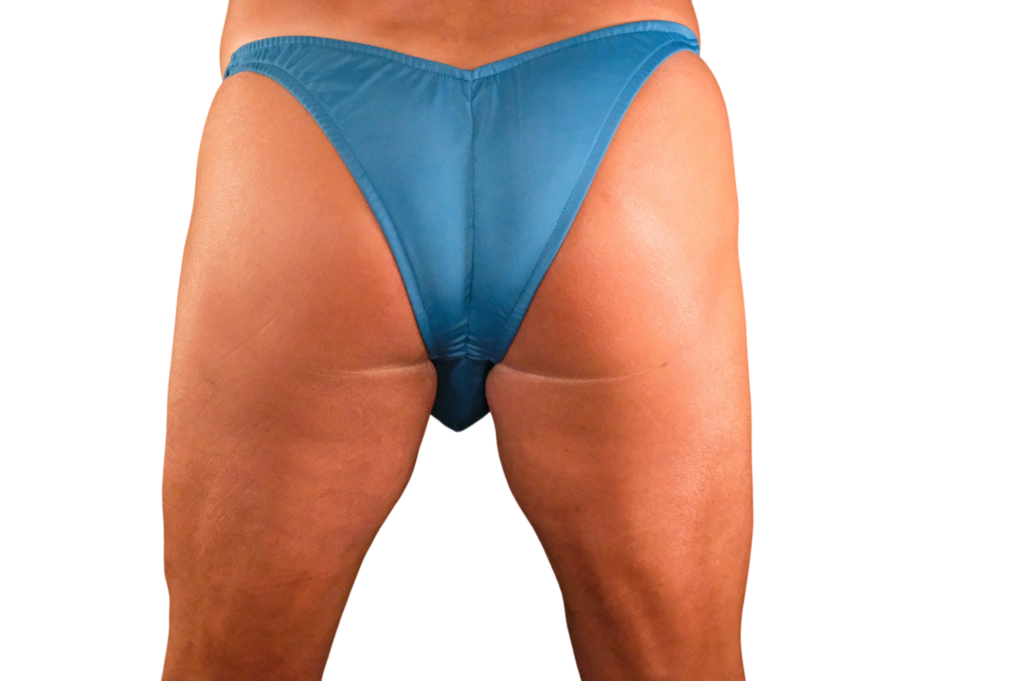
Compared with a traditional racing brief, a bikini generally features narrower sides, higher leg openings, and reduced fabric coverage.
The front may be anatomically shaped, while the rear can range from full coverage to a narrower Brazilian-style cut.
Men’s bikini swimwear has a long history in European beach culture and specialty men’s fashion.
Today, the category includes an enormous range of styles.
Classic Men’s Spandex Bikinis
These swimsuits maintain enough coverage for comfortable swimming while offering a smaller silhouette than a traditional brief.
They are popular among men who enjoy tanning, beach vacations, and fitted swimwear.
High-Cut Men’s Bikinis
High-cut bikinis feature leg openings that rise higher on the hips.
This creates a longer-legged appearance and reduces fabric around the upper thighs.
Narrow-Side Bikinis
Some designs replace conventional side panels with very narrow strips of spandex.
These swimsuits offer a more minimal appearance while retaining recognizable bikini construction.
Brazilian-Style Men’s Bikinis
Brazilian-inspired designs typically provide reduced rear coverage.
They can offer a flattering combination of a small front pouch, narrow sides, and a more revealing back.
For many men, the bikini is the ideal balance between sexy styling and everyday wearability.
4. Micro Bikini Swimsuits for Men: When Smaller Becomes Better
Micro bikinis take traditional men’s bikini swimwear and reduce the fabric considerably.
These designs may feature miniature front pouches, extremely narrow side straps, and smaller rear panels.
Some micro bikinis look like scaled-down versions of conventional swim briefs.
Others are so minimal that they barely resemble traditional men’s swimwear.
What Makes a Swimsuit Micro?
There is no universal industry definition, but micro swimsuits generally share several characteristics.
They use less fabric than conventional bikinis, have smaller front panels, and often feature narrow straps instead of wide side panels.
The overall objective is to create a swimsuit that provides the intended coverage with as little material as practical.
Why Men Love Micro Bikinis
For some men, micro swimwear is about minimizing tan lines.
For others, it is about the lightweight feeling of wearing very little.
Many appreciate the bold appearance and the freedom to wear something outside traditional men’s fashion expectations.
A properly fitted micro bikini can be surprisingly comfortable, although secure coverage becomes increasingly important as the amount of fabric decreases.
5. Ultra-Micro Spandex Swimsuits: Taking the Bikini to Its Limits
Ultra-micro swimwear represents an even more extreme category.
These designs may feature front panels only large enough to provide very limited coverage, connected by thin straps or narrow pieces of fabric.
Rear coverage may be dramatically reduced.
Some ultra-micro styles are intended primarily for sunbathing, private pool settings, or specialized beach environments rather than active swimming.
The Design Challenge
Creating a functional ultra-micro swimsuit requires careful attention to fabric stretch, pouch shaping, and strap placement.
When a swimsuit contains very little material, small differences in fit can dramatically affect comfort and coverage.
An ultra-micro swimsuit that is too tight may cause discomfort.
One that is too loose may shift during movement.
For this reason, choosing the correct design and size is especially important.
6. Men’s Spandex Thong Swimwear: Minimal Coverage with Maximum Style
Thong swimsuits are one of the most distinctive categories in men’s specialty swimwear.
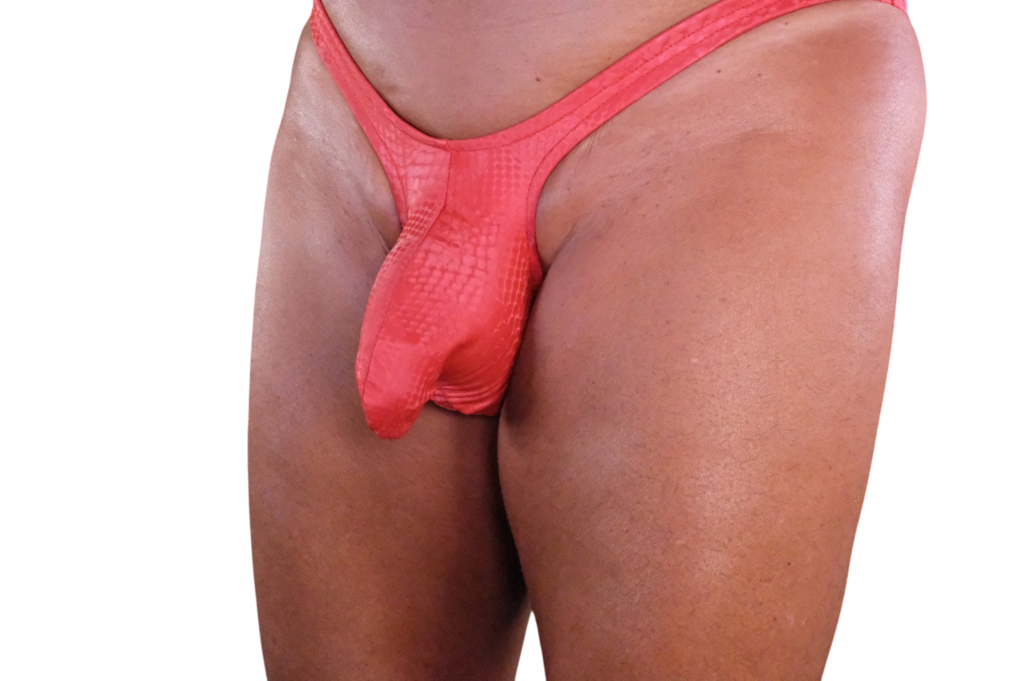
A traditional thong provides front coverage while replacing the conventional rear panel with a narrow strip of material.
The result is a sleek, revealing swimsuit that leaves most of the buttocks uncovered.
Men’s thongs are available in several different styles.
Athletic Thongs
Athletic-style thongs typically feature a supportive front pouch and a secure waistband.
They offer a relatively structured fit.
Bikini Thongs
Bikini thongs combine a smaller front pouch with narrow sides and minimal rear coverage.
Micro Thongs
Micro thongs reduce the size of the front panel and side straps.
Some use very small anatomical pouches.
Ultra-Micro Thongs
These designs take the concept even further, using minimal fabric and extremely narrow straps.
For men who enjoy revealing swimwear, thongs provide a distinctive alternative to conventional briefs and bikinis.
They are also popular among enthusiasts who want to reduce rear tan lines.
7. Men’s G-String Swimsuits: The Next Step Toward Pouch-Only Swimwear
G-string swimsuits take minimal swimwear construction to another level.
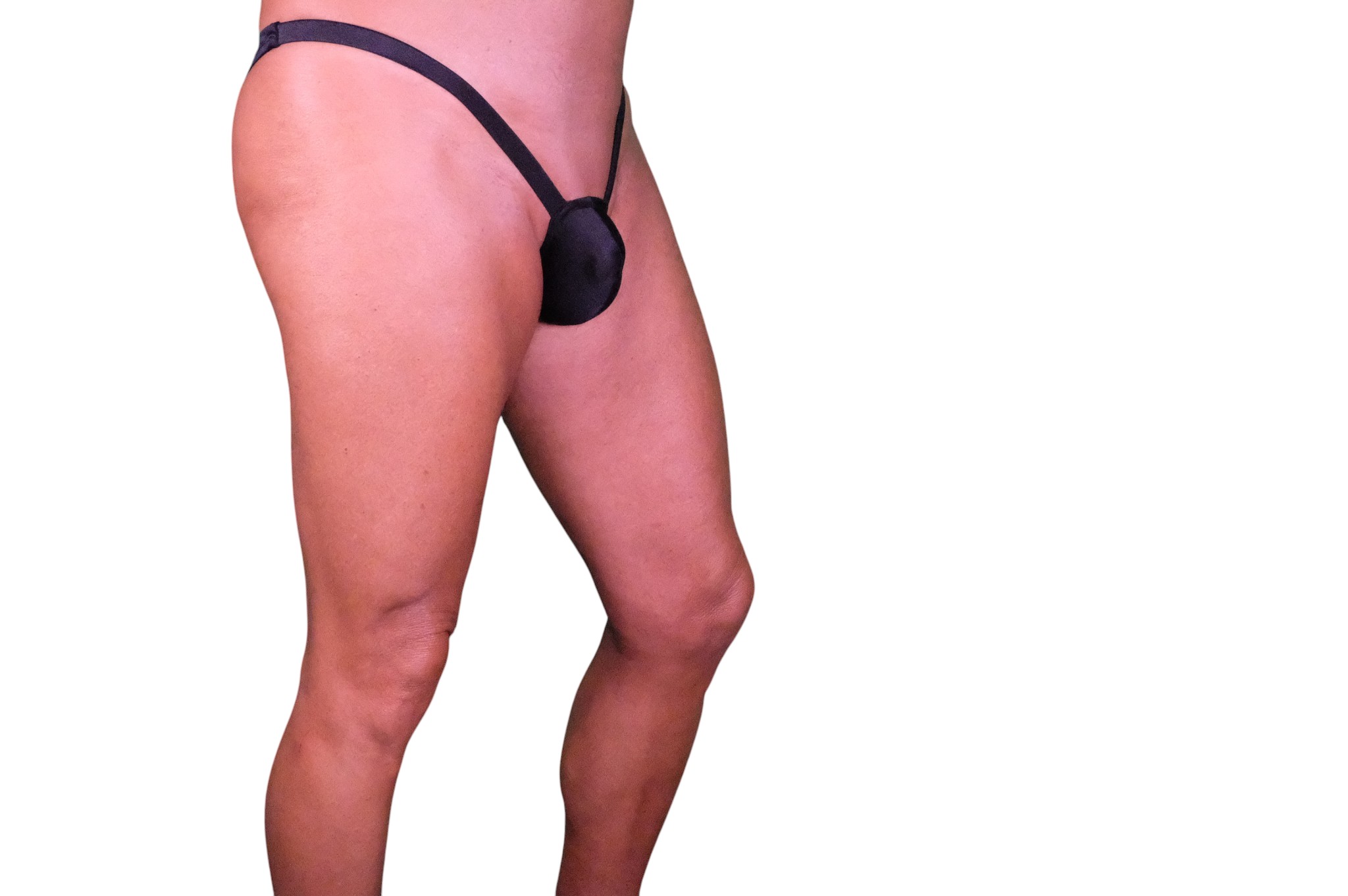
A typical men’s G-string features a small front pouch connected to a very narrow waistband and rear string.
Unlike a thong, which may have a somewhat wider rear strip, a G-string generally uses extremely narrow straps.
Some designs have triangular fronts, while others feature contoured anatomical pouches.
Why Choose a G-String?
For enthusiasts, the attraction is the combination of minimal fabric, lightweight comfort, and an exceptionally revealing appearance.
A G-string can provide a different sensation from wearing a conventional bikini because there is so little material around the hips and buttocks.
However, these designs are not suitable for every public environment.
Many swimming pools, resorts, and public beaches have minimum coverage requirements.
Before wearing a G-string in public, it is important to check local regulations and venue policies.
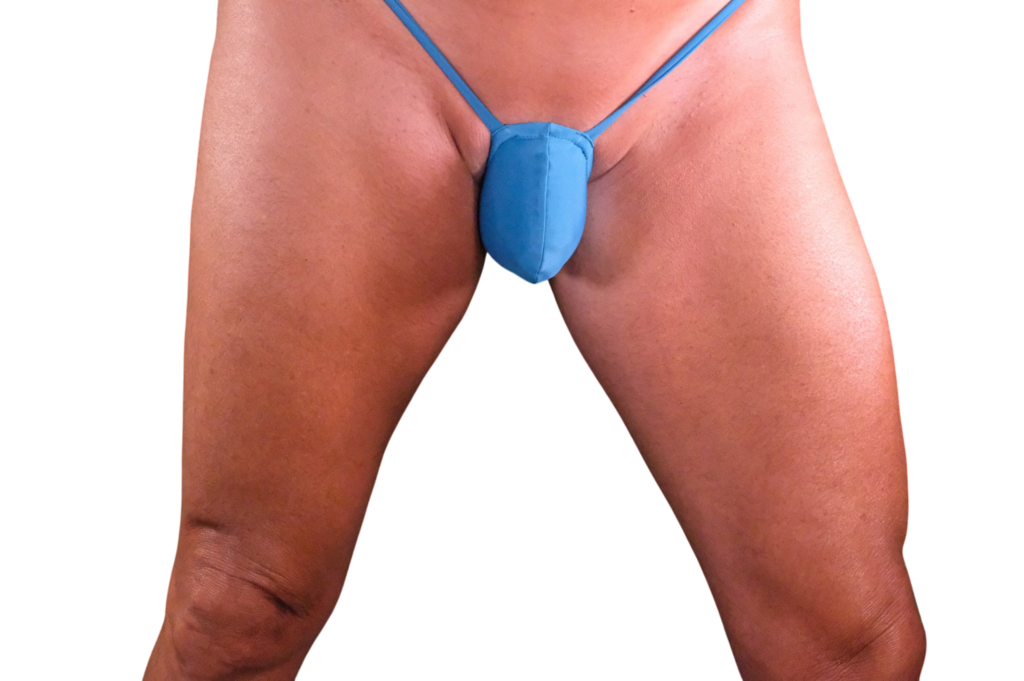
8. Pouch-Only Swimwear: The Extreme End of Men’s Spandex Swimsuits
At the far end of the men’s swimwear spectrum are pouch-only designs.
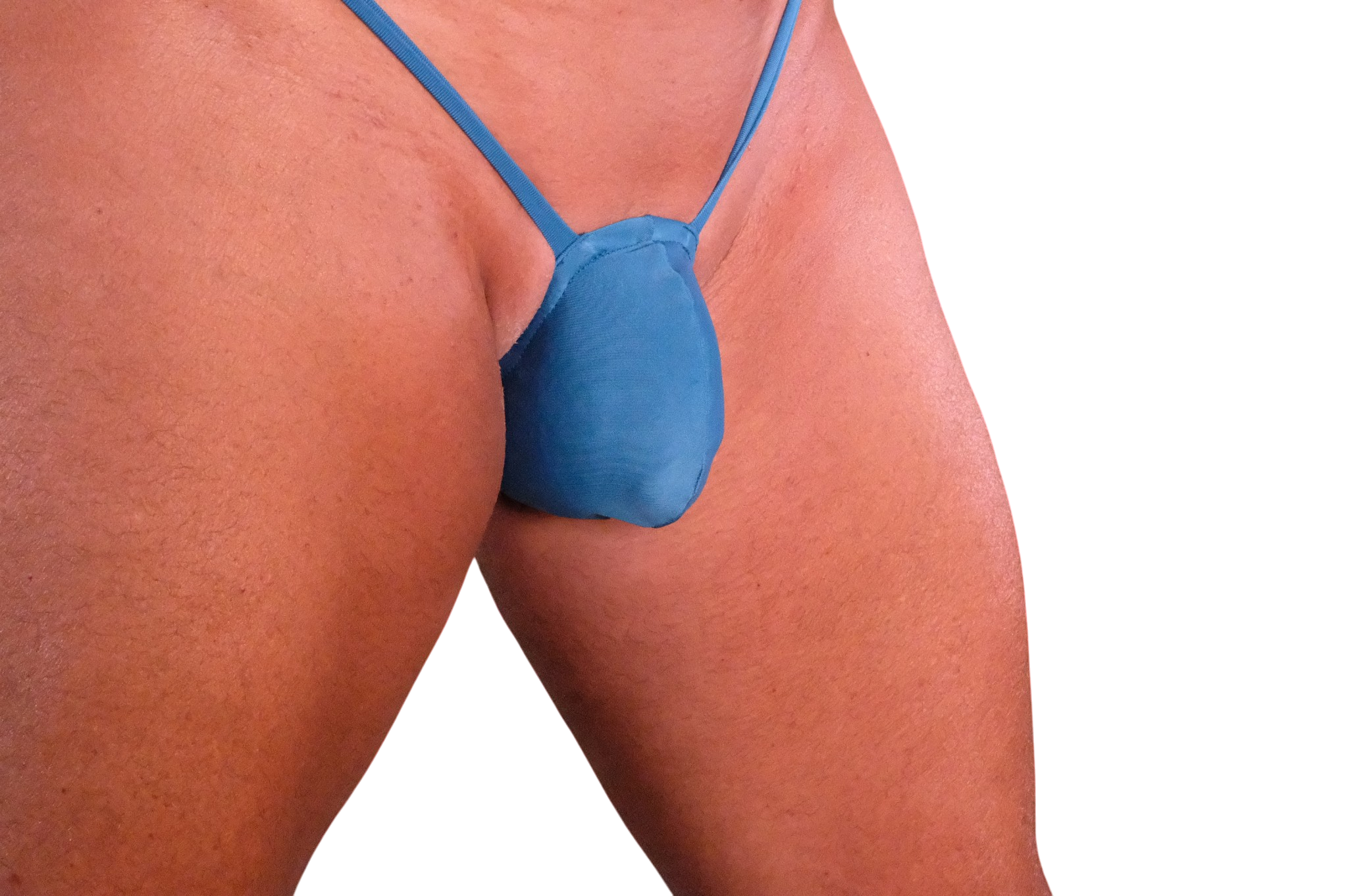
These swimsuits are constructed around a minimal front pouch, with little additional fabric beyond the straps required to hold it in place.
Some resemble extremely small G-strings.
Others use unusual strap arrangements or specialized construction to reduce visible fabric.
Pouch-only swimwear is among the most adventurous forms of men’s specialty fashion.
What Is a Pouch-Only Swimsuit?
A pouch-only swimsuit typically features a small front panel designed to accommodate or cover the anatomy.
Rather than using conventional bikini sides and a rear panel, the design relies on narrow straps or other minimal support structures.
The amount of coverage varies considerably.
Some styles remain suitable for designated swimwear environments, while others provide such limited coverage that they are more appropriate for private or clothing-optional settings.
Why Are Pouch-Only Designs Appealing?
For some wearers, the appeal is the challenge of reducing a swimsuit to its simplest possible form.
Others appreciate the freedom of movement, minimal tan lines, and distinctive appearance.
These designs demonstrate how far stretch fabric technology can take minimalist swimwear construction.
Are Pouch-Only Swimsuits Practical?
That depends on the design.
A well-constructed pouch-only swimsuit may be comfortable for lounging or tanning.
However, highly minimal styles may not remain secure during swimming, diving, or vigorous activity.
The smaller the garment, the more important proper fit becomes.
9. Men’s Micro-Pouch Swimwear: The Small-Bulge Revolution
One of the most interesting developments in specialty men’s swimwear is the growing variety of reduced-bulge designs.
For many years, some manufacturers emphasized large anatomical pouches that created a prominent front appearance.
That style remains popular.
However, specialty designers also offer swimsuits intended to create a smaller, more subtle front profile.
What Is a Micro-Pouch Swimsuit?
A micro-pouch swimsuit uses a reduced-size front panel.
Some designs are intended for men with naturally small anatomy.
Others use shaping or gentle compression to create a less pronounced silhouette.
The objective is often to produce a minimal front appearance that complements the overall small size of the swimsuit.
Why Would a Man Want a Smaller-Looking Bulge?
The reasons vary.
Some men simply prefer a streamlined appearance.
Others enjoy feminine or gender-neutral fashion.
Some appreciate the contrast between an extremely small pouch and a traditional men’s swimsuit.
The micro-pouch aesthetic is another example of how men’s swimwear is becoming more individualized.
A prominent bulge is no longer the only design objective.
Comfort remains essential, and no swimsuit should require painful compression or restricted circulation.
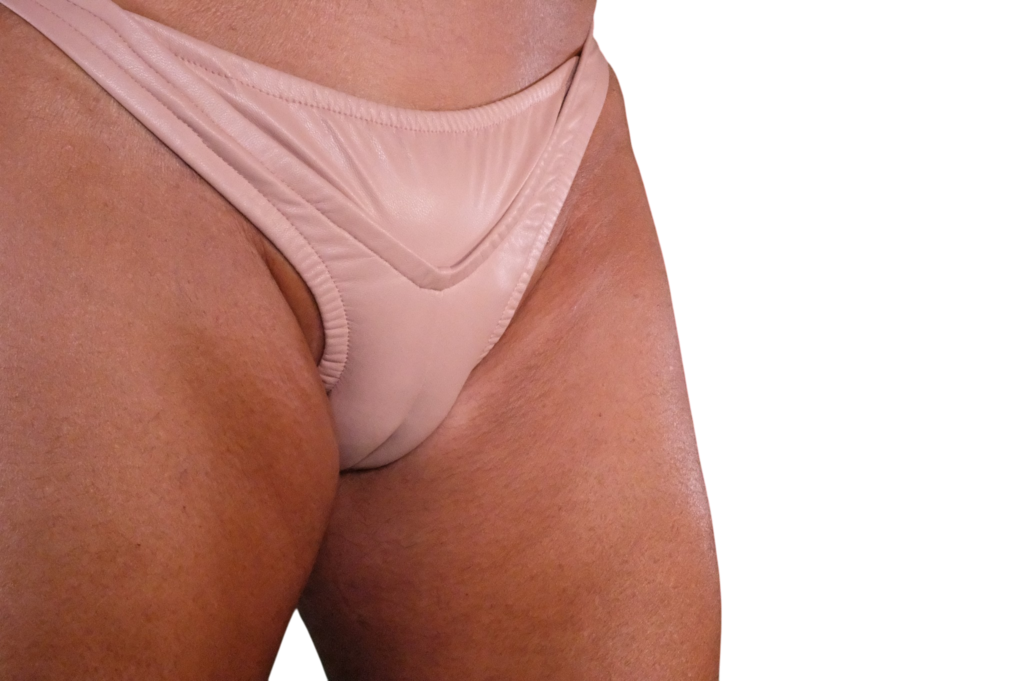
10. Flat-Front and MTF Spandex Swimsuits
Specialty swimwear has also expanded into designs intended to create a more traditionally feminine front appearance.
These include flat-front bikinis, tucking-compatible swimsuits, and MTF transformation styles.
For transgender women, feminine men, crossdressers, and gender-fluid individuals, these garments can provide additional options for beachwear.
Flat-Front Spandex Bikinis
Flat-front designs minimize visible projection through fabric shaping and construction.
They may resemble conventional women’s bikini bottoms.
Tucking Swimwear
Tucking-compatible swimsuits help support a smoother silhouette when worn with an appropriately arranged tuck.
Some use additional lining or compression panels.
Others are designed to be worn over specialized tucking underwear.
Any tucking technique should be comfortable and should not cause pain, numbness, or skin irritation.
Feminine Contour Designs
Some specialty swimsuits use shaped panels and seams to create the visual impression of a more traditionally feminine genital contour.
These are garment-based visual effects rather than anatomical changes.
Feminizing Accessories
Some enthusiasts also explore accessories such as FuFu Clips, which are marketed for temporary genital concealment and feminine presentation.
These products are distinct from ordinary swimwear and can place pressure on sensitive tissue. Their safety has not been well established, so caution is warranted.
For many wearers, properly fitted flat-front or tucking-compatible swimwear provides a simpler way to achieve the desired appearance.
11. Men’s Feminine Spandex Swimsuits
Another important category is feminine swimwear designed for male bodies.
These swimsuits borrow styling elements from women’s bikini fashion.
They may feature high-cut legs, narrow side straps, rounded front panels, pastel colors, or delicate patterns.
Some are designed to accommodate male anatomy while retaining a feminine appearance.
Others focus on creating a smooth, flat-front silhouette.
Feminine men’s swimwear can appeal to many different people, including straight men, gay men, bisexual men, crossdressers, and gender-diverse individuals.
Enjoying feminine swimwear does not determine someone’s sexual orientation or gender identity.
12. Sheer, Mesh, and Wet-Look Spandex Swimwear
Fabric selection can dramatically change the appearance of a swimsuit.
Traditional swimwear typically uses opaque materials.
Specialty designs may incorporate mesh, translucent panels, glossy finishes, or exceptionally thin fabrics.
Sheer Swimwear
Sheer swimsuits use translucent material that reveals more of the body than conventional swimwear.
These designs are generally best suited to private or designated adult environments where transparency is permitted.
Mesh-Panel Swimsuits
Mesh panels can create visual contrast while retaining more coverage in selected areas.
Wet-Look Spandex
Wet-look fabrics feature a glossy or reflective surface.
They can create a dramatic appearance without necessarily being transparent.
Metallic Spandex
Metallic finishes are popular in specialty fashion swimwear because they reflect light and emphasize the garment’s contours.
These materials can make even a conventional bikini look striking.
13. Men’s Spandex Swimwear Is Not Just for Gay Men
For decades, small men’s bikinis, thongs, and G-strings have been associated with gay beach culture.
Gay communities have played an important role in popularizing body-conscious men’s swimwear and encouraging more expressive styles.
However, fitted spandex swimwear is not exclusive to any sexual orientation.
Straight men can enjoy micro bikinis.
Bisexual men can prefer traditional racing briefs.
Gay men can choose conservative swim trunks.
A man’s swimsuit does not determine his sexuality.
As specialty swimwear becomes more varied, men have greater freedom to choose styles based on personal taste rather than traditional labels.
14. How to Choose Your First Sexy Spandex Swimsuit
For men who have worn loose swim trunks throughout their lives, switching to fitted spandex can feel like a major change.
A gradual approach can make the experience easier.
Start with a Traditional Brief
A Speedo-style swimsuit provides a secure, athletic fit.
It is a practical starting point for men who want to become comfortable wearing fitted swimwear.
Move to a Bikini
Once comfortable with a traditional brief, consider a bikini with narrower sides and higher-cut legs.
Try a Micro Bikini
A micro bikini introduces smaller front coverage and a more minimal appearance.
Explore Thongs and G-Strings
Men who enjoy minimal rear coverage may prefer thong or G-string designs.
Experiment with Specialty Pouches
For those interested in a particular front silhouette, anatomical pouches, micro-bulge designs, and flat-front styles provide additional possibilities.
There is no requirement to progress toward smaller swimsuits.
The best style is the one that feels comfortable and suits the wearer’s preferences.
15. Choosing the Right Pouch Size
One of the most important considerations in men’s spandex swimwear is front pouch construction.
Different pouch designs produce very different appearances.
Anatomical pouches provide shaped room and support.
Traditional flat-seam fronts offer a relatively streamlined appearance.
Micro pouches reduce the amount of front fabric.
Low-profile designs minimize visible projection.
MTF-inspired fronts create a smoother, more traditionally feminine silhouette.
The correct choice depends on the wearer’s anatomy, comfort requirements, and desired appearance.
A pouch that is too small may cause pinching or excessive pressure.
A pouch that is too large may shift or fail to provide the intended fit.
Rather than simply ordering a smaller size, choose a swimsuit designed for the desired front profile.
16. Wearing Men’s Micro Swimwear at the Beach
The first public appearance in a tiny swimsuit can feel intimidating.
Many men worry about attracting attention, particularly if they are wearing a thong or micro bikini for the first time.
Choosing the right location can make a significant difference.
Some beaches and resorts are more accepting of minimal swimwear than others.
A location where fitted briefs and bikinis are common may be a comfortable place to begin.
It can also help to wear a cover-up when walking to and from the beach.
Once settled, many wearers find that the experience becomes more comfortable with familiarity.
Confidence often develops gradually.
The goal is to enjoy a preferred swimsuit while respecting the rules and expectations of the surrounding environment.
17. Caring for Your Spandex Swimsuits
Proper care is particularly important for micro swimwear because narrow straps and small panels can be more vulnerable to damage.
Rinse swimsuits in fresh water after swimming in chlorine or saltwater.
Use mild detergent and avoid bleach.
Hand-washing is often preferable for delicate designs.
Allow the swimsuit to air-dry away from excessive heat.
Avoid twisting narrow straps or wringing small pouch panels.
With proper care, quality spandex swimwear can retain its stretch and appearance for many uses.
18. Koalaswim and the World of Specialty Men’s Spandex Swimsuits
For men looking beyond conventional swimwear, specialty manufacturers such as Koalaswim.com offer an opportunity to explore more adventurous designs.
The appeal of specialty swimwear is the diversity of choices.
One man may prefer a traditional masculine bikini with a defined pouch.
Another may want a tiny micro-bulge design.
A third may prefer a feminine flat-front swimsuit.
Others may be interested in thongs, G-strings, ultra-micro bikinis, or pouch-only designs.
Rather than treating men’s swimwear as a single category, specialty designers recognize that different wearers want very different silhouettes.
That diversity is one of the most exciting aspects of modern spandex swimwear.
19. The Future of Men’s Spandex Swimwear: Smaller, More Creative, and More Individual
Men’s swimwear continues to evolve.
Traditional swim briefs remain popular, but specialty fashion has expanded into increasingly minimal and unconventional designs.
Future innovations may include improved micro-pouch construction, more secure ultra-micro swimsuits, sophisticated flat-front shaping, and new stretch fabrics.
Designers may also continue blending traditionally masculine and feminine styling.
The result is likely to be a wider variety of swimsuits rather than one dominant trend.
Some men will always prefer traditional Speedo-style briefs.
Others will continue exploring bikinis, thongs, G-strings, and pouch-only designs.
The important development is that men now have more freedom to select swimwear that reflects their individual preferences.
Frequently Asked Questions About Men’s Spandex Swimsuits
What are the main styles of men’s spandex swimsuits?
The major categories include racing briefs, square-cut shorts, bikinis, micro bikinis, ultra-micro swimsuits, thongs, G-strings, pouch-only designs, and specialty flat-front or MTF-inspired swimwear.
What is the difference between a Speedo and a men’s bikini swimsuit?
A traditional Speedo-style brief generally has wider sides and more coverage. A bikini typically features narrower sides, higher leg openings, and a smaller silhouette.
What is a pouch-only swimsuit?
A pouch-only swimsuit is a minimal design built around a small front pouch and narrow supporting straps, with little additional fabric.
Are men’s micro swimsuits comfortable?
They can be comfortable when properly sized and constructed from quality stretch fabrics. Extremely minimal designs may be better suited to lounging than vigorous swimming.
Can straight men wear micro bikinis and thongs?
Yes. Swimwear preferences do not determine sexual orientation.
What is a micro-bulge swimsuit?
A micro-bulge swimsuit is designed to create a small, subtle front profile rather than emphasizing a prominent pouch.
Can a spandex swimsuit make a man look feminine?
Certain flat-front, high-cut, and MTF-inspired designs can create a more traditionally feminine silhouette.
Are pouch-only swimsuits legal at public beaches?
That depends on local laws and coverage requirements. Some designs may be permitted in certain locations but restricted elsewhere.
What is the smallest men’s swimsuit available?
There is no universally recognized smallest design. Specialty manufacturers offer ultra-micro G-strings and pouch-only styles that use extremely little fabric.
What is the best first spandex swimsuit for a man?
A traditional swim brief or moderately cut bikini is often a practical starting point because it combines secure coverage with the feel of fitted spandex.
Conclusion: From Speedos to Pouch-Only Designs, Men’s Spandex Swimwear Has No Single Limit
Men’s spandex swimsuits have evolved into one of the most diverse categories in modern beach fashion.
What began with fitted racing briefs has expanded into an extraordinary range of styles.
Traditional Speedo-style swimsuits remain an excellent choice for men who prefer an athletic appearance.
Bikinis provide smaller cuts and greater freedom of movement.
Micro and ultra-micro swimsuits offer dramatically reduced fabric coverage.
Thongs and G-strings introduce increasingly minimal rear designs.
Pouch-only swimsuits represent one of the most extreme expressions of minimalist men’s swimwear.
Meanwhile, micro-bulge, flat-front, feminine, and MTF-inspired designs demonstrate that men’s swimwear is no longer limited to conventional masculine silhouettes.
The real revolution in men’s spandex swimwear is not simply that swimsuits are becoming smaller. It is that men can now choose exactly how they want their swimsuits to fit, look, and express their individuality.
For enthusiasts who enjoy sexy, adventurous swimwear, specialty collections such as those at Koalaswim.com provide a way to explore designs beyond traditional beachwear.
Whether your ideal swimsuit is a classic Speedo, a tiny bikini, an ultra-micro thong, or a minimalist pouch-only design, modern spandex makes an extraordinary range of possibilities available.
From Speedos to pouch-only designs and everything in between, men’s spandex swimwear has entered an era of unprecedented variety, creativity, and personal expression.